
About Dr. Murtuza Rassiwala | Orthopedic, Arthroscopy, Joint Replacement & Trauma Surgeon in Indore
Home » About Dr. Murtuza Rassiwala | Orthopedic, Arthroscopy, Joint Replacement & Trauma Surgeon in Indore
Meet Your Doctor
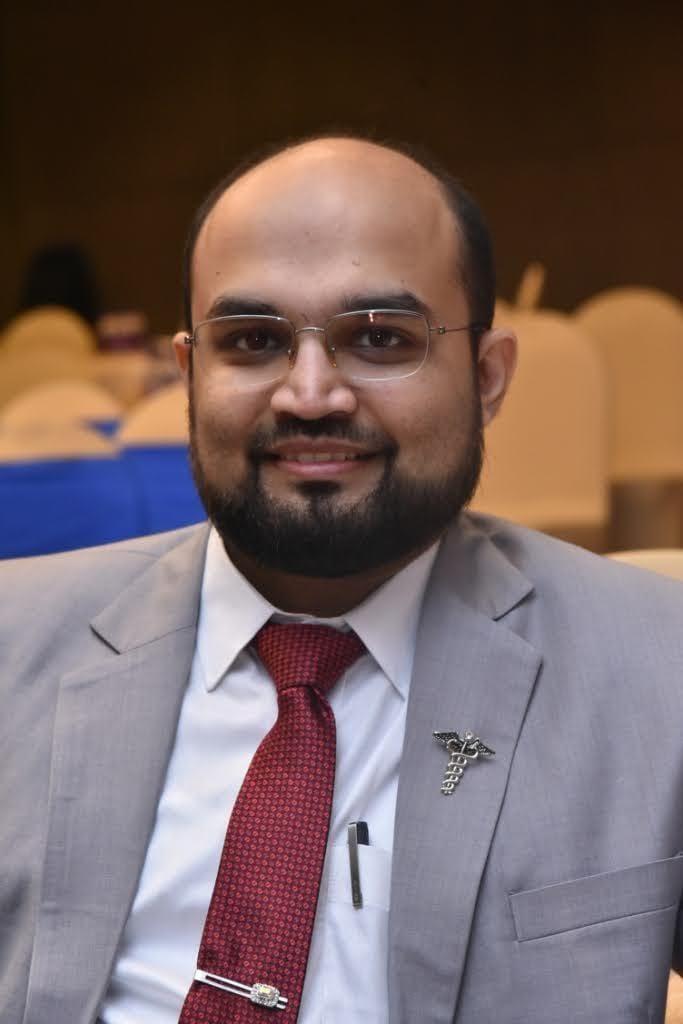
Dr. Murtuza Rassiwala | Orthopedic, Arthroscopy, Joint Replacement & Trauma Surgeon in Indore
MBBS, DNB Orthopaedics, MNAMS, F.I.A.S.M., F.I.A.J.R., Associate professor, AIMS, Arthroscopy/ Joint Replacement/ Trauma Surgeon in Indore | 12+ Years of Experience
Dr. Murtuza Rassiwala is a renowned Orthopedic, Arthroscopy, Joint Replacement & Trauma Surgeon in Indore, widely recognized for his expertise in arthroscopic surgery, joint preservation, fracture management, and joint replacement procedures. With over a decade of dedicated experience, Dr. Rassiwala has transformed the lives of numerous patients by delivering advanced orthopedic care with precision and compassion.
Dr. Rassiwala completed his MBBS from Baroda University in 2013, laying a strong foundation for his medical career. He further specialized in orthopedics by achieving his DNB – Orthopedics/Orthopedic Surgery from the prestigious National Board of Examinations in 2018. His commitment to lifelong learning and clinical excellence has driven him to stay at the forefront of the latest advancements in orthopedic treatments.
- Arthroscopic Surgery
- Fracture Management
- Shoulder Surgeries
- Joint Replacement Surgery
- Joint Preservation
- Knee Surgeries
Patient-Centric Approach
Why Choose Hakimi Ortho Care?
Dr. Murtuza Rassiwala believes in a personalized approach to patient care. He takes the time to understand each patient’s unique medical history, lifestyle, and goals before recommending treatment. His dedication to patient education ensures that individuals feel confident and informed about their healthcare decisions.
With an unwavering commitment to excellence and patient well-being, Dr. Murtuza Rassiwala ensures comprehensive orthopedic care that is both innovative and empathetic. Whether it’s a sports injury, chronic joint pain, or a fracture, his expertise and compassionate care make him a trusted name in orthopedic surgery.
Training and experience and a patient-first approach to bone, joint and sports injury care
Picking a surgeon is one of the most personal choices a patient makes. You want to know who is going to assess you, how they reach their conclusions, what training informs their advice and whether they will listen to what matters to you. On this page, we introduce you to Dr. Murtuza Rassiwala, the orthopedic surgeon behind Hakimi Ortho Care in Indore, so you can make that decision with confidence.
Quick Answer: Dr. Murtuza Rassiwala is an Orthopedic & Arthroscopic Surgeon in Indore, MBBS from Baroda University (2013), DNB in Orthopedics from National Board of Examinations (2018), MNAMS, & Fellowships, F.I.A.S.M., & F.I.A.J.R. He works with Hakimi Ortho Care with clinics at Jawahar Marg and Phadnis Colony. He is an expert in knee and shoulder arthroscopy, joint replacement, sports injuries and fractures.
Doctor Introduction
Dr Murtuza Rassiwala is an Orthopedic Surgeon, Arthroscopy, Joint Replacement, Trauma surgeon in Indore whose practice has been built around three inter-related areas: arthroscopic (key-hole) surgery of the knee and shoulder, joint replacement for arthritis and treatment of injuries and fractures. His patients range from teenagers with their first sports injury to grandparents whose arthritic knees make walking a challenge.
His approach is the same throughout this range. He learns the patient’s story and what the patient wants. He verifies the diagnosis by careful examination and appropriate investigations. He discusses every reasonable option including non-surgical treatment before any treatment is undertaken. He has more than 12 years of experience in orthopedics, arthroscopy, Joint Replacement & Trauma according to the practice.
Current Designation
Role | Detail |
Consultant | Orthopaedic and Arthroscopic Surgeon, Hakimi Ortho Care, Indore |
Academic | Associate Professor [VERIFY BEFORE PUBLICATION – institution and department] |
Hospital affiliations | [VERIFY BEFORE PUBLICATION – hospitals where surgeries are performed] |
Specialisations
- Knee arthroscopy and ligament surgery – ACL, PCL, MCL and LCL reconstruction, meniscus and cartilage surgery.
- Shoulder arthroscopy – rotator cuff repair, Bankart and SLAP repair, instability surgery, impingement and frozen shoulder surgery.
- Joint replacement – full and partial knee replacement for arthritis.
- Sports injuries – diagnosis, treatment and rehabilitation planning for athletes and active persons.
- Trauma/Fracture Care – Clavicle, Humerus and other bone fractures, joint dislocations
- Evaluate and treat joint problems of the hip, ankle, elbow, wrist and pelvis.
Education
Year | Qualification | Institution |
2013 | MBBS | Baroda University |
2018 | DNB (Orthopaedics) | National Board of Examinations, New Delhi |
— | MNAMS | National Academy of Medical Sciences |
DNB in Orthopedics is a recognized postgraduate specialty degree all over the country and is awarded after successful completion of structured residency training and examinations. DNB holders who meet the criteria of the Academy are inducted into the National Academy of Medical Sciences (MNAMS).
Professional Training
Postgraduate training in orthopedics involves many years of supervised clinical practice in trauma, joint diseases, pediatric orthopedics, spine, sports injuries and joint replacement. It combines outpatient clinics, emergency care, operating theater experience and academic assessment. That broad base is what allows Dr. Rassiwala to look at the whole musculoskeletal picture for a patient, not one joint.
Fellowships
Dr. Rassiwala holds two Fellowships:
- F.I.A.S.M.
- F.I.A.J.R.
Fellowship training is a post-graduate education with a concentration of experience in a particular area. For patients it means more exposure to procedures and decision-making in those areas.
Clinical Expertise
A lot of what Dr Rassiwala does in the clinic is about working out what the symptoms of a patient mean and what they need. A painful knee can be a sign of a torn meniscus, early arthritis, a kneecap problem or pain referred from the hip. Frozen capsule (rotator cuff ) . Instability . Even the neck can cause a painful shoulder . These can be differentiated by careful history taking and focused examination. Investigations are not routine but are performed to answer specific questions.
He also treats a variety of non-surgical conditions – including many sprains, tendon problems, early arthritis, frozen shoulder and degenerative meniscus tears – with physio advice, activity modification, medications and selected injections.
Surgical Expertise
When surgery is indicated, Dr. Rassiwala’s procedures include:
- Knee: total knee arthroplasty, partial knee replacement, ACL, PCL, MCL and LCL reconstruction, meniscus repair and partial meniscectomy, chondroplasty, cartilage regeneration, osteochondral defect repair, diagnostic arthroscopy, loose body removal, synovectomy.
- Shoulder: Shoulder arthroscopy, rotator cuff repair, superior capsular reconstruction, Bankart repair, SLAP repair, instability surgery, biceps tendon surgery, impingement surgery, frozen shoulder surgery, AC joint dislocation management.
- Fractures: clavicle, proximal humerus and shaft of humerus fractures etc.
Clinical Philosophy
Dr. Rassiwala’s philosophy can be encapsulated in a few guiding principles:
- Treat the patient, not the scan. MRI and X-ray findings are interpreted according to symptoms and function, as many scan findings are common in pain-free individuals.
- Save what can be saved. All are designed to preserve the patient’s own tissue: repair a meniscus rather than remove it, treat a cartilage defect early, or opt for a partial rather than a total knee replacement, when appropriate.
- Surgery only when value-adding. Surgery is risky and requires rehabilitation and is therefore only recommended if the expected benefit clearly outweighs these.
- Realistic expectations. Patients are told what an operation can and cannot do, and how long they are likely to be in recovery.
- Recovery is a part of treatment. Rehabilitation is planned from the first consultation.
Treatment Approach – What Patients Can Expect
- First Visit: Your concerns, history and goals are discussed thoroughly. A physical exam is done and old reports and images are reviewed.
- Diagnosis: If additional testing is required, the justification for each is outlined. If there are results, you can see what they mean in plain language.
- Decision: Non-surgical and surgical options are covered, with the benefits, risks, costs and recovery time of each.
- Ruling: You don’t have to rush the process, you can ask questions, involve family members and get a second opinion if you want.
- Follow-Up: The plan is reviewed at planned intervals and modified as recovery is slower or faster than expected.
Technology and Techniques
Arthroscopic procedures are performed using camera systems and specialized instruments which allow treatment to be performed through small incisions. In joint replacement, the knee is aligned and balanced using proven implant systems and accurate instrumentation.
A Day in the Practice
Dr. Rassiwala’s typical day is split between the clinic and the operating theater. In the clinic he might see a young cricketer with a twisted knee, an office worker with months of shoulder pain, an elderly patient recovering from knee replacement or a family looking for a second opinion on a fracture. In every consultation there is listening, examining, reviewing reports, and explaining the plan. Operating days are for scheduled arthroscopic, joint replacement and fracture procedures, with ward rounds to check on patients recovering from surgery, and to steer their early physiotherapy.
This rhythm is interspersed with follow-up visits. He sees patients regularly after treatment to make sure they are recovering well, adjust rehabilitation if needed, and catch any issues early that need addressing.
Working With Other Specialists
Orthopedic care is often a team effort. Dr Rassiwala works with physiotherapists who help with rehabilitation, anesthetists who help plan safe anesthesia and pain control, and physicians who help to optimize conditions like diabetes, high blood pressure and heart disease before surgery. In patients with inflammatory arthritis, coordination with a rheumatologist ensures that medicines are managed safely around the time of surgery. In the older patient, plan includes attention to bone health and fall prevention.
What Patients Value
Patients of Dr. Rassiwala often say they like the way he explains things, the time he takes to answer questions and the fact that he is willing to talk about non-surgical options. We post real patient reviews on Google and on the Patients Feedback page and invite new patients to read these reviews to learn about others’ experience.
Commitment to Ethical Practice
Every recommendation is made with the patient’s interest in mind. This means transparency around costs, being clear when a procedure is unlikely to help, avoiding unnecessary investigation, and respecting each patient’s right to decide on treatment once they understand the options.
Teaching and Academic Work
Dr. Rassiwala is an Associate Professor, training the next generation of physicians. Teaching makes you constantly reassess the evidence, guidelines and techniques – all of which feeds back into the care of patients.
Patient-Centered Care
Orthopedic problems impact people’s work, family responsibilities and independence. Dr. Rassiwala understands that a homemaker needs to squat and climb stairs, a shopkeeper needs to stand for hours, a student athlete wants to get back on the team and an older adult might simply want to walk to the temple or mosque without pain. These real goals inform treatment strategies. Family members are welcome to join, and questions will be answered in the language the patient is most comfortable with.
Continuing Medical Education
Orthopedics is constantly evolving as research tells us what works and techniques are developed. Surgeons keep up to date by attending conferences, workshops, academic teaching and reading the latest clinical evidence. This means treatment recommendations for patients based on what is known today – for example the trend to save the meniscus, the careful use of arthroscopy in arthritic knees, and structured, criteria-based return-to-sport testing after ligament surgery.
Preparing for Your First Visit
To make the most of your consultation, bring any previous X-rays, MRI or CT scans and reports, a list of your current medicines, any discharge summaries from previous treatment, and a brief note of your main symptoms and questions. Wear loose clothing so that the joint can be easily examined.